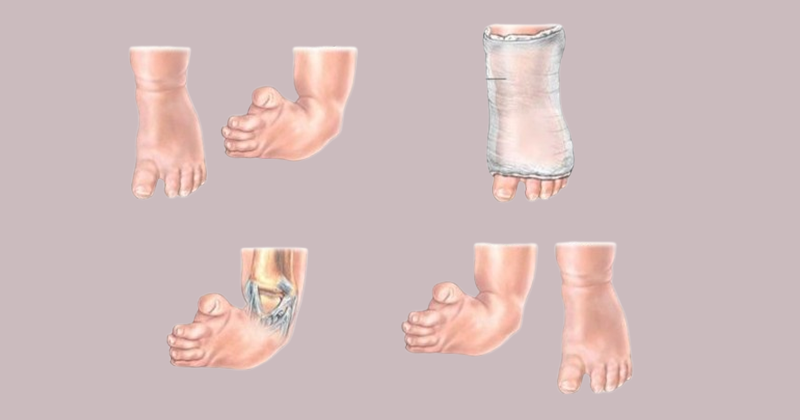
CTEV casting
Congenital Talipes Equinovarus (CTEV), commonly known as clubfoot, is a congenital deformity in which a newborn’s foot is twisted inward and downward. The condition can affect one or both feet and, if untreated, may lead to difficulty walking, pain, and abnormal gait. Early diagnosis and treatment are crucial to achieving normal foot function.
CTEV casting, often performed using the Ponseti method, is the gold standard non-surgical treatment for clubfoot. The technique involves gentle, gradual manipulation of the foot followed by the application of a plaster cast to hold the corrected position. The cast is changed weekly, and with each change, the foot is carefully stretched closer to the normal alignment. This process usually continues for 5–8 weeks until the foot reaches an almost normal position.
In many cases, after the serial casting, a minor procedure called tenotomy is performed to release a tight Achilles tendon, further improving foot alignment. After correction, a brace is used to maintain the corrected position and prevent relapse, often worn full-time initially and then during naps or nighttime for several years.
CTEV casting is highly effective, with success rates exceeding 90% when started early, usually within the first few weeks of life. Complications are rare but can include skin irritation, cast sores, or overcorrection if not carefully monitored. Regular follow-up is essential to monitor progress and adjust the casting or bracing as needed.
Overall, CTEV casting provides a safe, non-invasive, and highly successful method to correct clubfoot deformities. Early intervention, careful casting, and adherence to follow-up protocols allow children to achieve functional, pain-free feet, enabling normal walking and physical activity without the need for extensive surgery.