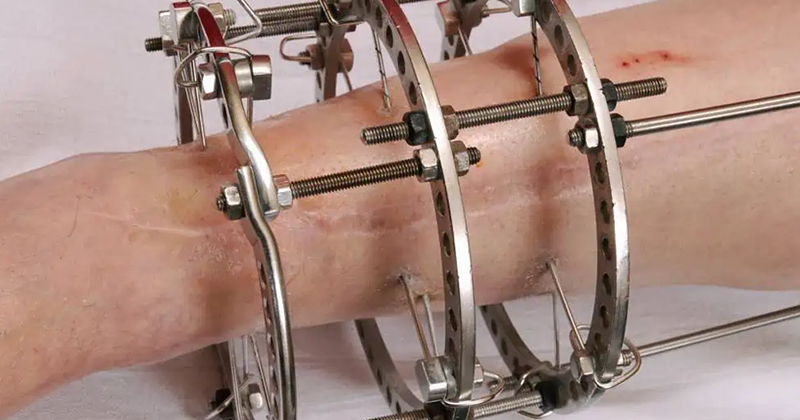
External fixation
External fixation is an orthopedic procedure used to stabilize fractures, correct deformities, or support bones during healing. Unlike internal fixation, which uses plates, screws, or rods placed inside the body, external fixation involves pins or wires inserted into the bone through the skin and connected to an external frame. This setup holds bones in the proper position while allowing access to soft tissues for monitoring, dressing changes, or additional procedures.
External fixation is commonly used in complex fractures, open fractures, comminuted fractures (where the bone is shattered into several pieces), or injuries with significant soft tissue damage. It is also applied in limb lengthening, correction of angular deformities, and joint fusion procedures. The technique is particularly useful when internal fixation is risky due to infection or poor bone quality.
The procedure is usually performed under general or regional anesthesia. After careful alignment of the fractured bone, pins or wires are inserted percutaneously into stable bone segments. These pins are then attached to a rigid external frame, which can be adjusted to maintain proper alignment or gradually correct deformities. Regular follow-up is essential to monitor healing, adjust the frame if needed, and check for complications.
Postoperative care involves pin site care to prevent infection, monitoring for signs of neurovascular compromise, and gradual initiation of weight-bearing or movement depending on the fracture and fixation type. Physical therapy may be needed to maintain joint mobility and muscle strength.
Complications can include pin site infection, loosening of the pins, delayed union or nonunion of the fracture, and neurovascular injury, but with meticulous care, these risks are minimized.
Overall, external fixation is a versatile and effective method for stabilizing complex fractures and correcting deformities. Its minimally invasive approach to bone stabilization, combined with adjustable mechanical support, makes it an invaluable tool in modern orthopedic surgery, allowing bones and surrounding tissues to heal while minimizing additional trauma.