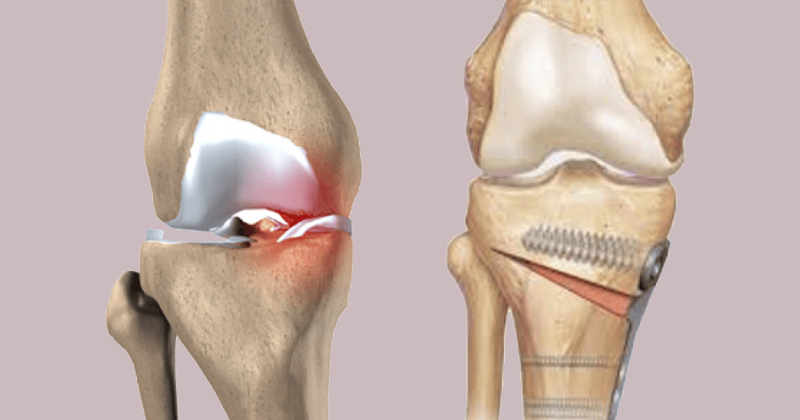
High tibial osteotomy surgery
High tibial osteotomy (HTO) is a surgical procedure performed to treat unicompartmental knee osteoarthritis, particularly in younger, active patients with varus deformity (bow-legged alignment) affecting the medial compartment of the knee. The surgery aims to realign the knee joint by shifting weight-bearing forces from the damaged medial compartment to the healthier lateral compartment, thereby reducing pain, improving function, and delaying the need for total knee replacement.
During the procedure, the surgeon makes a precise cut (osteotomy) in the upper part of the tibia (shinbone). The bone is then gradually opened or closed, depending on the type of HTO (opening wedge or closing wedge), to correct the alignment of the leg. The repositioned bone is stabilized using plates, screws, or other fixation devices to allow proper healing. Bone grafts may be used in some cases to support the osteotomy site. The surgery is performed under general or regional anesthesia and typically takes one to two hours.
Postoperative rehabilitation is essential for a successful outcome. Initially, patients may require crutches or partial weight-bearing for several weeks, followed by a structured physical therapy program to restore range of motion, strengthen muscles, and improve gait. Recovery and return to full activity may take several months, depending on individual healing rates and adherence to rehabilitation protocols.
High tibial osteotomy has been shown to relieve pain, improve knee function, and delay progression of osteoarthritis in appropriately selected patients. Complications, though relatively uncommon, may include infection, delayed bone healing, nerve or vascular injury, or over- or under-correction of alignment.
Overall, HTO is a joint-preserving procedure that provides a valuable alternative to knee replacement for younger patients with unicompartmental osteoarthritis, allowing them to maintain an active lifestyle while protecting the knee from further degenerative changes.