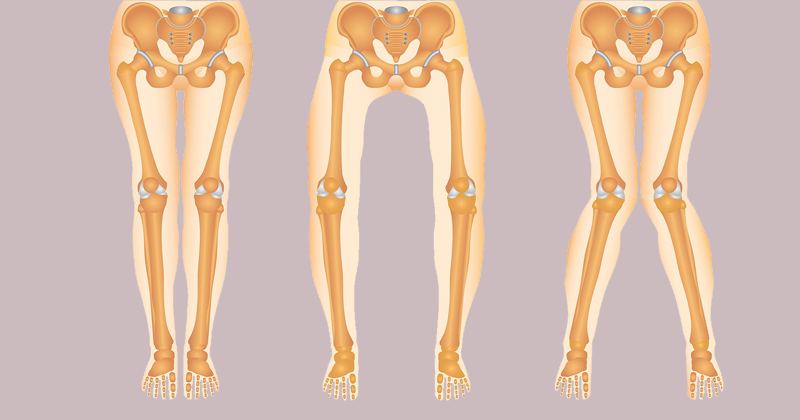
Genu valgum/Varum
Genu valgum and genu varum are common angular deformities of the knee that affect alignment and gait. Genu valgum, often called “knock-knees,” is characterized by inward angulation of the knees, causing them to touch while the ankles remain apart. Genu varum, or “bowlegs,” involves outward angulation of the knees, so the legs appear bowed, and the knees stay apart while the ankles come together. These conditions can occur in children and adults and may be physiological (normal developmental variations) or pathological, caused by underlying bone disorders, metabolic conditions, or trauma.
In children, mild genu valgum is typically normal between ages 2 and 5 and usually resolves spontaneously as the child grows. Similarly, mild genu varum is common in infants and often corrects naturally by age 2. However, severe or persistent deformities may require medical evaluation, especially if associated with pain, difficulty walking, or rapid progression. Causes of pathological genu valgum include rickets, skeletal dysplasia, or obesity, whereas genu varum can result from Blount’s disease, osteoarthritis, or fractures affecting the growth plate.
Diagnosis relies on clinical examination, measurement of the intercondylar (for genu valgum) or intermalleolar (for genu varum) distance, and imaging studies like X-rays to assess bone alignment and rule out underlying conditions.
Management depends on age, severity, and underlying cause. In growing children, observation and corrective orthotics may suffice. In severe or progressive cases, guided growth surgery or osteotomy may be indicated to realign the knee. In adults, treatment focuses on managing symptoms, improving alignment, and preventing joint degeneration, sometimes requiring surgical intervention.
Early recognition and proper management of genu valgum and genu varum are essential to prevent complications such as abnormal gait, knee pain, and early-onset osteoarthritis. Multidisciplinary care, including orthopedic evaluation and physiotherapy, can optimize outcomes and improve long-term joint health.