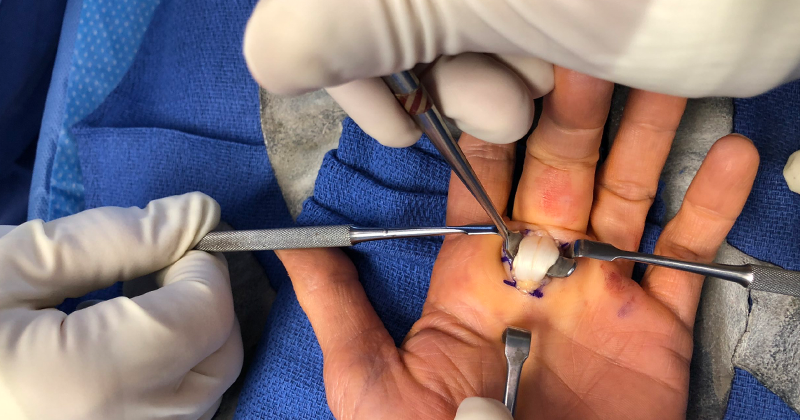
Trigger finger release
Trigger finger, medically known as stenosing tenosynovitis, is a condition in which one or more fingers become painful, stiff, and lock or catch during movement. This occurs when inflammation causes narrowing of the tendon sheath, preventing the flexor tendon from gliding smoothly. The condition is commonly associated with repetitive hand use, diabetes, rheumatoid arthritis, and middle-aged or older individuals. When conservative treatments such as rest, splinting, anti-inflammatory medications, or corticosteroid injections fail to relieve symptoms, trigger finger release surgery may be recommended.
Trigger finger release is a minor surgical procedure designed to restore smooth finger movement and relieve pain. It is usually performed on an outpatient basis under local anesthesia. During the procedure, the surgeon makes a small incision in the palm near the base of the affected finger. The tightened A1 pulley, which is restricting tendon movement, is carefully released, allowing the tendon to move freely. In some cases, a percutaneous technique using a needle may be employed, further minimizing tissue trauma.
Recovery after trigger finger release is typically quick, with most patients able to move their finger immediately after surgery. Mild swelling, soreness, or stiffness may occur but usually resolves within a few weeks. Hand therapy or simple exercises may be recommended to improve flexibility and strength. Patients can often resume normal activities within a short period, although heavy gripping should be avoided initially.
Trigger finger release has a high success rate and provides long-term relief for the majority of patients. Complications such as infection, nerve injury, or persistent stiffness are rare. Overall, this procedure is safe and effective in restoring hand function, relieving discomfort, and improving quality of life for individuals affected by trigger finger.