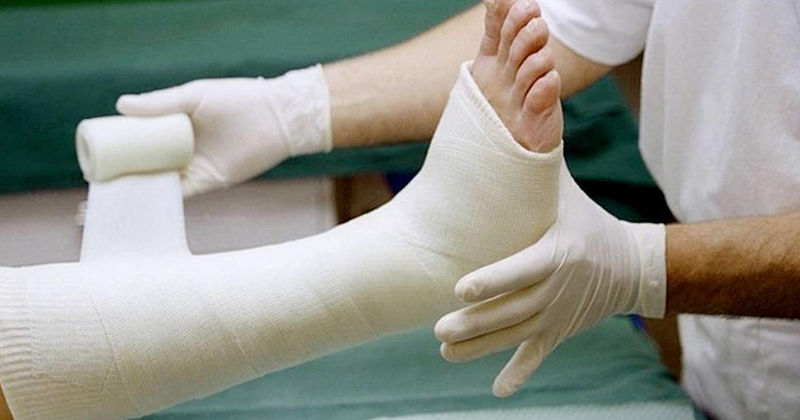
Plaster cast
A plaster cast is a rigid medical dressing used to immobilize broken bones, injured joints, or soft tissue injuries to promote proper healing. It is commonly made from gauze or cloth impregnated with plaster of Paris, which hardens when moistened and molded around the affected area. Plaster casts are widely used in orthopedic practice due to their ability to provide strong support, maintain bone alignment, and prevent movement that could delay recovery or worsen the injury.
The process of applying a plaster cast begins with careful assessment of the injury, often including X-rays to determine fracture type and alignment. A soft padding layer is first wrapped around the limb to protect the skin, followed by wet plaster bandages applied evenly and shaped to conform to the contours of the limb. As the plaster hardens over several minutes, it forms a solid, supportive shell. The cast must immobilize the affected area while allowing for some ventilation and comfort.
Patients are instructed on cast care to prevent complications such as skin irritation, pressure sores, or swelling. The limb should be elevated to reduce swelling, and the cast should be kept dry, as moisture can weaken the plaster and lead to skin problems. Regular follow-up appointments are essential to monitor healing, check cast integrity, and, if needed, perform adjustments or replace the cast.
Once the bone or injury has sufficiently healed, the cast is removed using a specialized cast saw. Modern alternatives, such as fiberglass casts, provide lighter weight, greater durability, and water resistance, but plaster casts remain a reliable and cost-effective option, especially for complex fractures. Overall, plaster casting is a fundamental orthopedic technique that stabilizes injuries, ensures proper alignment, and promotes effective bone and tissue healing while minimizing complications.