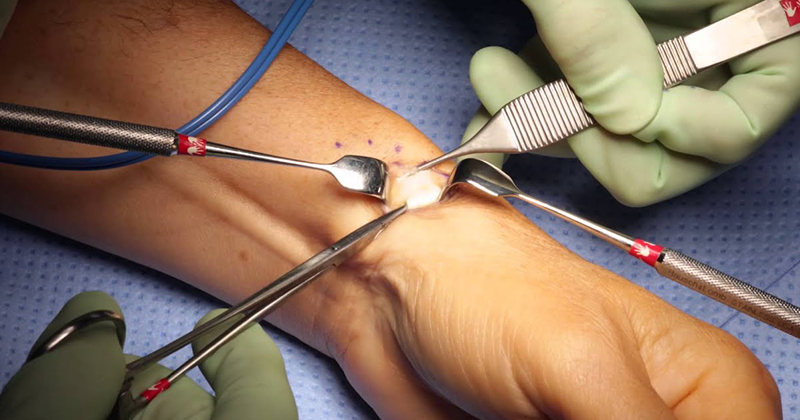
Dequervain release
Dequervain’s tenosynovitis is a condition that affects the tendons on the thumb side of the wrist, causing pain, swelling, and difficulty gripping or twisting objects. It occurs when the tendons of the abductor pollicis longus and extensor pollicis brevis become inflamed or constricted within their protective sheath. Conservative treatments—such as rest, splinting, anti-inflammatory medications, and steroid injections—are often effective. However, when symptoms persist despite these measures, Dequervain’s release surgery may be necessary.
Dequervain’s release is a relatively simple outpatient procedure performed under local or regional anesthesia. During the surgery, the surgeon makes a small incision over the affected tendon sheath and carefully releases the constricting fascia, freeing the tendons to glide smoothly. Care is taken to avoid injury to nearby sensory nerves, which can cause numbness or tingling if damaged. The goal of the procedure is to relieve pain, restore thumb and wrist function, and prevent recurrence of tendon entrapment.
Postoperative care typically involves a short period of immobilization using a splint, followed by gradual mobilization of the thumb and wrist. Physical therapy may be recommended to regain strength, flexibility, and dexterity. Most patients experience significant pain relief within a few weeks, with minimal scarring and return to normal activities.
Complications are uncommon but can include infection, stiffness, nerve injury, or incomplete release leading to persistent symptoms. Overall, De Quervain’s release is a safe and effective surgical option for patients who have not responded to non-surgical treatments. By relieving tendon constriction, the procedure improves hand function, reduces pain, and enhances quality of life, allowing patients to resume daily activities and occupational tasks comfortably.