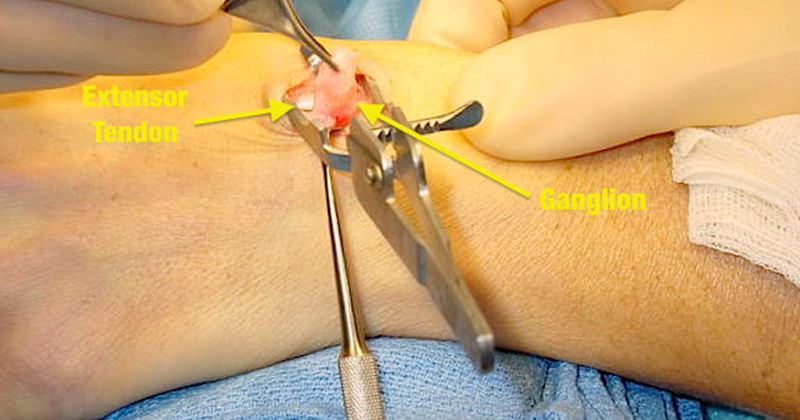
Ganglion cyst excision
A ganglion cyst is a noncancerous, fluid-filled lump that most commonly develops along the tendons or joints of the wrist and hand. While often painless, ganglion cysts can sometimes cause discomfort, limit range of motion, or compress nearby nerves, leading to tingling or weakness. When conservative treatments such as observation, splinting, or aspiration fail, surgical excision may be recommended to remove the cyst and prevent recurrence.
Ganglion cyst excision is a procedure performed under local or regional anesthesia, depending on the cyst’s size and location. The surgeon makes a small incision over the cyst, carefully dissects it from surrounding tissues, and removes the cyst along with its stalk, which connects it to the joint or tendon sheath. Complete removal of the stalk is essential to minimize the risk of recurrence, which is the most common complication. In some cases, arthroscopic techniques are used, offering the advantage of smaller incisions and faster recovery.
Postoperative care involves wound management, pain control, and gradual return to activity. The wrist or hand may be immobilized briefly with a splint or bandage to support healing. Physical therapy is often recommended to restore strength, flexibility, and function. Most patients recover fully within a few weeks, with minimal scarring and improved range of motion.
Potential risks of ganglion cyst excision include infection, nerve or tendon injury, stiffness, and recurrence of the cyst. However, careful surgical technique and proper postoperative care usually lead to successful outcomes.
Overall, ganglion cyst excision is a safe and effective procedure for patients experiencing pain, functional limitations, or aesthetic concerns due to a ganglion cyst. By removing the cyst and addressing its root connection to the joint or tendon sheath, surgery helps restore normal hand and wrist function and improves quality of life.